

Most people assume aging is defined by how old they are on paper — however, in reality, the real differentiator is biological age vs chronological age. The earliest signs of accelerated biological aging often appear long before medical reports detect any abnormality.
You may look fit, exercise consistently, and maintain an active lifestyle — yet internally, the body may be aging faster. Instead of presenting as disease, biological aging shows up as gradual performance decline at a cellular and metabolic level. Over time, these changes become easy to ignore in the day-to-day hustle of work, deadlines, stress, and lifestyle trade-offs.
Biological aging doesn’t always show up as disease. It shows up as performance decline at a cellular and metabolic level — slow, subtle, and easy to ignore in the day-to-day hustle of work, deadlines, stress, and lifestyle trade-offs.
And for many working professionals, founders, and decision-makers, these signals don’t come as dramatic symptoms.
They surface as early inefficiencies.
Let’s break down the most common indicators that your biological age may be higher than your actual age.
Early Signs of Accelerated Biological Aging — What These Signs Reveal About Internal Health
Biological aging rarely begins as illness — rather, it begins as subtle shifts in energy, recovery, metabolism, cognition, and inflammation. In many cases, these early signs of accelerated biological aging appear in everyday life as slower recovery, persistent fatigue, weight resistance, brain fog, gut issues, sleep disruption, and recurring aches.
Most people attribute these changes to stress or workload; however, they usually indicate declining cellular efficiency and reduced resilience. Therefore, recognising these signals early allows proactive correction — before they progress into long-term health risks.

Above: A visual summary of commonly overlooked early warning signs of accelerated biological aging — including fatigue, inflammation, brain fog, weight resistance, digestive issues, slower recovery, and metabolic decline.
Early Signs of Accelerated Biological Aging: Persistent Fatigue — Even After Sleep and Rest
If you’re sleeping 7–8 hours but still waking up tired, dragging through the day, or needing caffeine to sustain energy — it’s often not “just stress” or workload.
It may signal:
- mitochondrial fatigue
- impaired cellular energy production
- metabolic inefficiency
- chronic low-grade inflammation
This is one of the earliest red flags of accelerated biological aging.
It feels like you are functioning — but not operating at your natural baseline performance capacity.
Weight Gain or Fat Retention Despite Diet & Exercise
When fat loss stalls — even with workouts and calorie discipline — the issue is rarely “willpower.”
It is more commonly linked to:
- aging metabolism
- insulin resistance
- hormonal imbalance
- elevated inflammatory markers
The body becomes less responsive — not because you’re doing less — but because your biological systems aren’t adapting efficiently anymore.
Metabolic aging often shows up here years before lab reports reflect abnormalities.
Slower Recovery, Muscle Stiffness & Frequent Aches
When workouts begin to feel heavier and soreness lingers longer than expected, it reflects stress at the cellular level. Consequently, tissue repair slows down, muscle resilience decreases, and recovery cycles become less efficient. Over time, many professionals normalize these patterns as “just getting older” — however, they are often early indicators of internal biological aging.
Brain Fog, Reduced Focus & Cognitive Fatigue
As biological aging accelerates, the brain often shows the impact first. For instance, individuals experience reduced sharpness, difficulty sustaining deep work, slower recall, and decision fatigue. Instead of restoring cognitive stamina, rest begins to offer diminishing benefit. As a result, greater effort is required to maintain the same level of focus.
Digestive Issues, Bloating & Gut Imbalance
Gut health plays a major role in:
- inflammation
- immunity
- metabolism
- cellular aging
Signs such as:
- frequent bloating
- acidity or discomfort
- irregular digestion
- food intolerance symptoms
often correlate with:
- microbiome imbalance
- leaky gut markers
- inflammatory stress
And the evidence is clear — poor gut health accelerates biological aging at a cellular level.
This is why longevity programs place gut optimization at the core of reversal strategies.
The relationship between gut health, immune resilience, and inflammation plays a pivotal role in how fast the body ages internally. The diagram below explains how gut dysbiosis and immune decline contribute to accelerated biological aging.
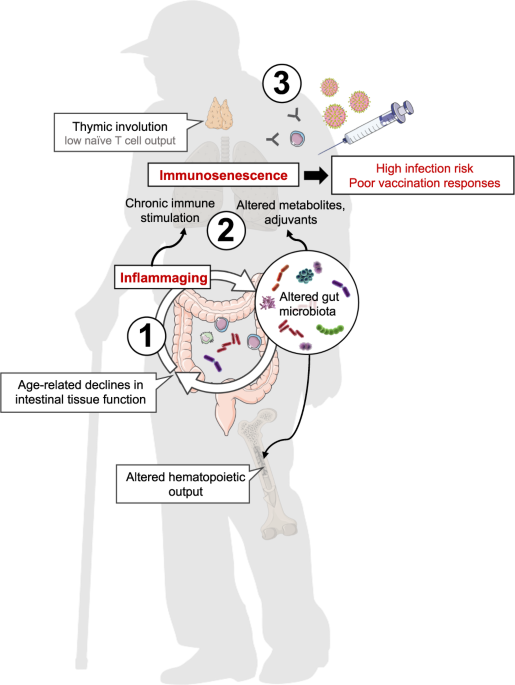
Why Routine Health Checkups Rarely Detect To Early Signs of Accelerated Biological Aging
Standard diagnostic panels are designed to identify:
- disease thresholds
- organ dysfunction
- major clinical abnormalities
They are not engineered to measure:
- aging speed
- cellular health
- mitochondrial efficiency
- metabolic resilience
- recovery capacity
Which is why many people experience:
“My reports look normal — but I don’t feel normal.”
Biological aging begins years before:
- diabetes
- hypertension
- heart disease
- hormonal disorders
are formally diagnosed.
By the time conventional markers appear — decline has already progressed silently.
Why Early Detection of Biological Aging Is a Game-Changer
Early identification of accelerated biological aging enables proactive correction — rather than reactive treatment. As a result, a structured longevity assessment helps reverse metabolic inefficiency, restore mitochondrial energy capacity, and reduce chronic inflammation. In addition, it supports gut repair, hormonal balance, and improved recovery cycles — thereby strengthening long-term resilience and performance capacity.
If your biological age is higher than your chronological age — your body is signaling that it is working harder than it should.
Ignoring those signals only compounds long-term risk.
Recognizing them early enables:
- smarter lifestyle optimization
- targeted clinical interventions
- sustainable aging and vitality
- improved healthspan — not just lifespan
You don’t need to wait for disease to pay attention to health.
You act when the early indicators appear — because that’s where real prevention begins.